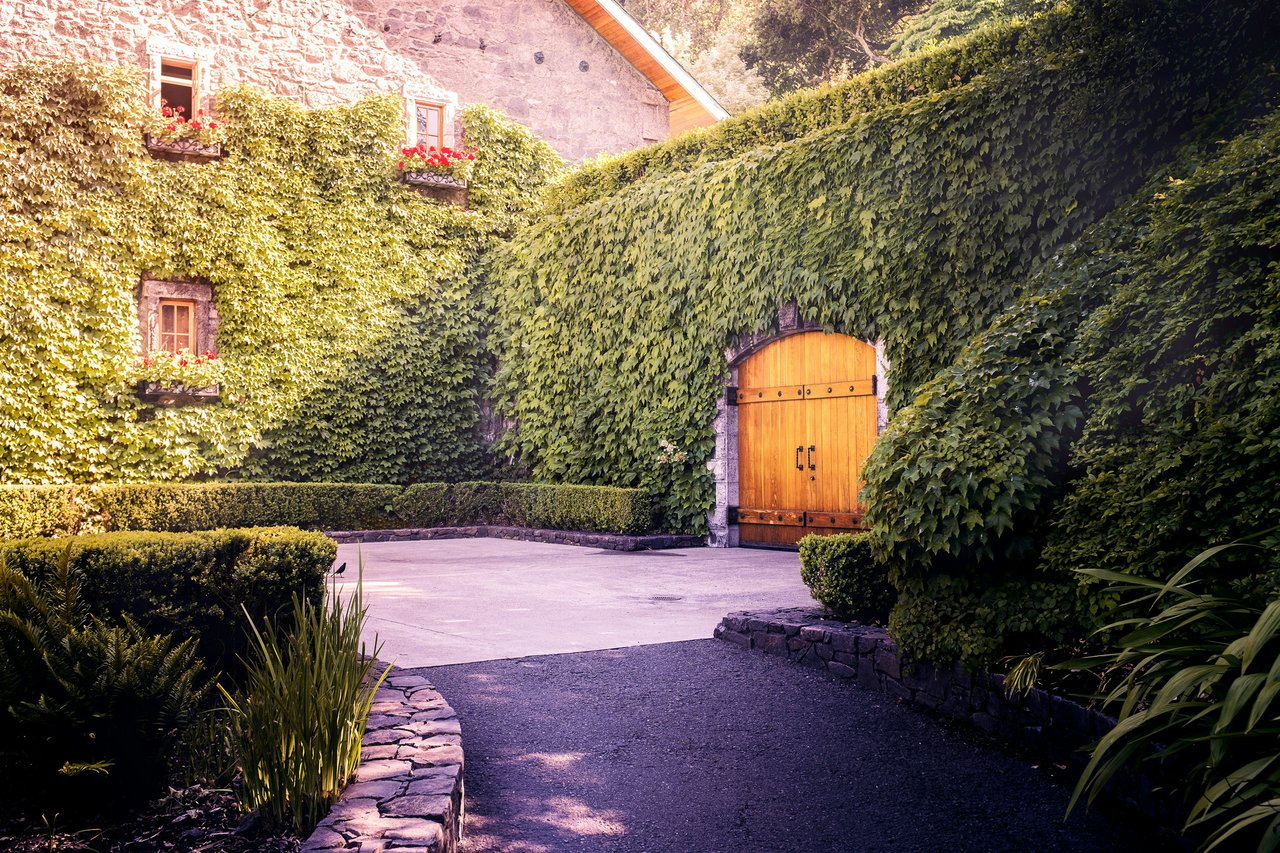
The thing buyers notice first about Coral Gables — before they register the school zone or the median price per square foot — is that the neighborhood looks the way it looks. The barrel tile roofs, the stucco in cream and ochre and terracotta, the arched openings, the bougainvillea on the garden wall. None of that is accidental. It is the result of a 100-year-old governance structure that has been enforced continuously.
For a buyer, understanding Coral Gables architecture is not only aesthetic appreciation — it is understanding why the neighborhood has held its value, what you can do with a property once you own it, and why some properties in the Gables carry a premium over structurally similar homes in other Miami neighborhoods.
George Merrick and the Foundation of Coral Gables
George Merrick platted Coral Gables in the 1920s with a specific vision: a planned "City Beautiful" modeled on the great European garden cities. He retained the firm Phineas Paist and the landscape architect Denman Fink to establish the architectural and landscape language. The result was a mandatory Mediterranean Revival aesthetic — stucco exteriors in warm earth tones, red clay barrel tile roofs, arched doorways and windows, wrought iron details, patterned ceramic tilework, and the use of locally quarried oolitic limestone for walls and garden elements.
Merrick also commissioned seven "themed villages" — clusters of homes in specific Old World styles to add variety within the Mediterranean framework. The Italian Village, French Normandy Village, Dutch South African Village, Chinese Village, French City Village, French Country Village, and Florida Pioneer Village each brought a distinct architectural character while maintaining the overall Mediterranean palette of the city. Several of these clusters are still largely intact.
The Biltmore Hotel (1926), the Venetian Pool (converted from a coral rock quarry), the Douglas Entrance, and the Miracle Mile commercial corridor were all part of Merrick's original conception — a self-contained, architecturally coherent community where commercial and civic life shared the same vocabulary as the residential streets.
The Three Periods of Coral Gables Architecture
Understanding Coral Gables real estate requires distinguishing three distinct architectural periods:
Period 1: Original Mediterranean Revival (1920s–1940s)
The purest expression of the Merrick vision. Homes from this era are typically built from or clad in oolitic limestone — Miami's native coral rock — with original plaster interiors, barrel tile roofs, and floor plans that do not conform to contemporary open-concept expectations. They have deep overhanging eaves, interior courtyard configurations, loggias, and inward-facing gardens.
These homes are not turnkey by default. Original mechanical systems (electrical, plumbing, HVAC) have typically been replaced multiple times — or need to be. Original windows may or may not be impact-rated. The charm is real; so is the management complexity.
What is not replaceable: the oolitic limestone. The original 1920s–1940s stone work — walls, garden structures, entry gate features — was quarried from Miami's unique geological substrate. You cannot source that material today. Buyers who understand this recognize that restoring an original Merrick-era home preserves something genuinely irreplaceable.
Period 2: Post-War and Mid-Century Transition (1950s–1970s)
Coral Gables grew significantly after World War II. The second wave of construction — still under architectural review — produced a more eclectic set of homes: some in a more restrained Mediterranean interpretation, some in a transitional modern style, some in what was then called "contemporary" (flat or low-pitched roofs, clean lines, more glass).
The 1950s–1960s homes in Coral Gables are a buyer segment worth attention. Those that have been correctly renovated — respecting the city's exterior standards while upgrading interiors to modern open plans and current mechanical standards — can be extraordinarily good value. The lots are large. The bones are solid. The canopy is mature.
Period 3: Contemporary Additions and New Construction (1980s–Present)
Coral Gables still requires architectural review for new construction and significant additions — but the standards applied to contemporary work allow for more flexibility than the original Mediterranean overlay required. The result is a generation of custom homes that interpret the Mediterranean vocabulary loosely: warm materials, arched openings as accents rather than structural elements, barrel tile as a nod rather than a mandate.
The best of these work well in context. The worst are jarring. The city's Board of Architects is the filter; its consistency over time is part of what makes the Gables' character durable.
What Architectural Review Means for Buyers
Every buyer should understand this before they close on a Coral Gables property and plan any exterior work.
Certificate of Appropriateness (COA): Required for exterior alterations visible from public ways on designated historic properties. The certificate requires Board approval and adherence to the Secretary of the Interior's Standards for rehabilitation.
Board of Architects: For non-historic properties, the Board of Architects reviews new construction and significant exterior modifications. Color changes, roof replacements, additions, fence installations, and pool additions require review.
What this means practically: You can renovate freely on the interior. The exterior — paint color, roofing material, window type, addition massing, fence height and material — requires process. This is not a barrier to renovation; it is a governance structure that has kept the neighborhood looking the way it does for 100 years. For buyers who are not planning major exterior work, it is simply an explanation for why the block looks the way it does.
If you are buying to renovate extensively, the right sequence is: engage the Board before you close, not after. Understand what your renovation scope requires in terms of review and timeline. Projects have been significantly delayed — and occasionally redesigned — by buyers who assumed the city's review was a formality.
Coral Gables Architecture as an Investment Argument
The governance structure is not just aesthetic preservation — it is an investment protection mechanism.
When you own a home in Coral Gables, you are protected from certain risks that buyers in ungoverned or lightly governed neighborhoods face: - The property next door will not be redeveloped into something incompatible with the surrounding neighborhood - Architectural character will not drift due to individual owner decisions - The city's active landscape protection programs maintain the canopy that contributes materially to property values
These protections are not rhetorical. They are the reason that Coral Gables has consistently outperformed less-governed Miami submarkets in terms of value retention through market cycles.
See what's on the market in Coral Gables right now — browse current listings, from original Mediterranean to mid-century and contemporary, by price and style.
Frequently Asked Questions About Coral Gables Architecture
What is Mediterranean Revival architecture? Mediterranean Revival is the dominant architectural style of Coral Gables — established by George Merrick and planner Phineas Paist in the 1920s. Characterized by stucco exteriors in warm earth tones, red clay barrel tile roofs, arched windows and doorways, wrought iron details, and inward-facing courtyards. The style draws from Spanish and Italian precedents.
Who designed Coral Gables? George Merrick, with architectural direction from Phineas Paist and Denman Fink as landscape architect. Merrick bought out and assembled the land, then retained the planning and design team to implement his City Beautiful vision starting in the early 1920s.
Can I renovate a home in Coral Gables? Interior renovations are unrestricted. Exterior alterations visible from public ways require a Certificate of Appropriateness (for historic properties) or Board of Architects approval. Confirm your specific property's status and planned scope with the City before closing if exterior renovation is part of your plan.
What are the themed villages in Coral Gables? Merrick planned seven themed villages — Italian, French Normandy, Dutch South African, Chinese, French City, French Country, and Florida Pioneer — to bring architectural variety within the overall Mediterranean framework. Several are still largely intact and are among Coral Gables' most interesting residential blocks.
What is oolitic limestone and why does it matter? Oolitic limestone is the native Miami coral rock used in original Merrick-era construction — walls, foundations, garden structures. It is no longer commercially quarried in the quantities used in the 1920s–1940s. Restoration of original limestone features is a skilled craft; replacement with period-accurate material is difficult. Homes with intact original limestone are considered premium by preservation-minded buyers.
Is Coral Gables architecture protected by law? Yes. The City of Coral Gables has a Board of Architects and a historic designation program that enforces exterior standards. Alterations without required approvals can result in stop-work orders, fines, and mandatory restoration. This is the same governance that has preserved the neighborhood's character for 100 years.
Chanel Hunter Milian · Douglas Elliman · License #3302916 · Equal Housing Opportunity
Not sure which corner of Miami is yours? My guide, Finding Your Corner of Miami, is a private tour of Coconut Grove, the neighboring villages and the Upper East Side — the residential pockets the listing sites never show. Free, straight to your inbox.
