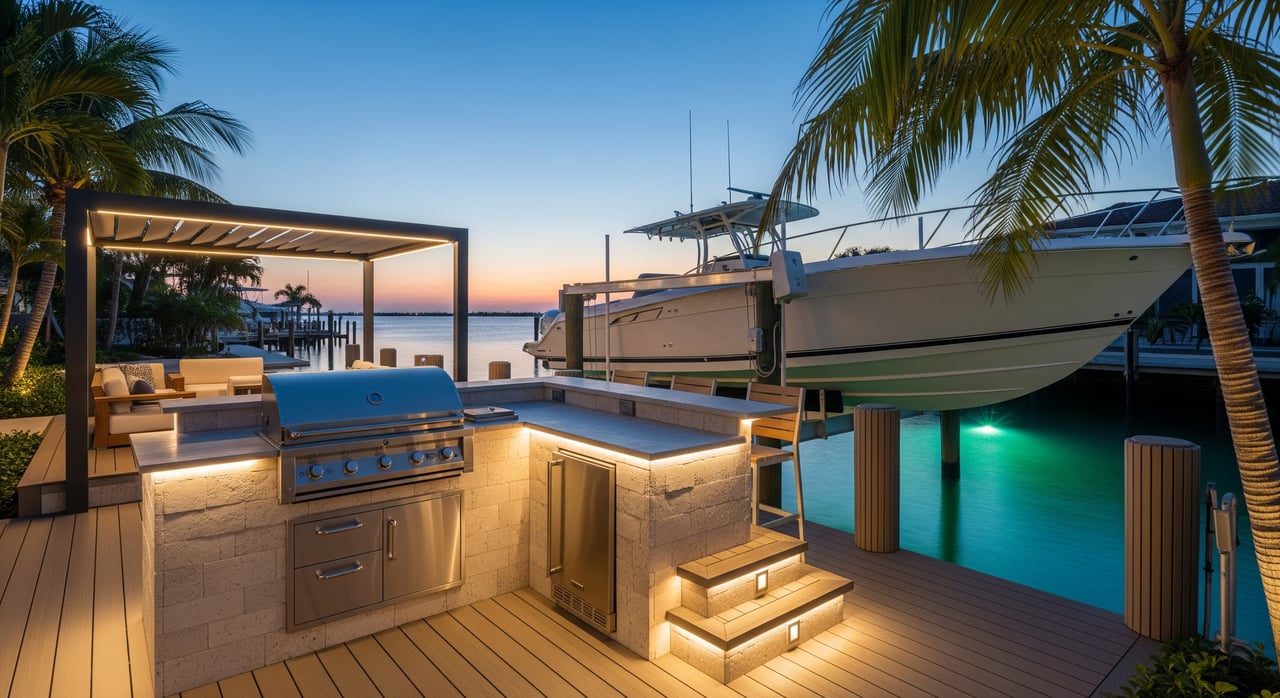
If your Moorings backyard faces the bay, your dock is your outdoor living room. You want a lift that protects your boat, lighting that looks great without harming wildlife, and an outdoor kitchen that stands up to salt air. Getting it right in The Moorings means blending design with code compliance and environmental care. This guide shows you how to plan smart, choose durable materials, and navigate approvals so your dockside upgrades add real enjoyment and long-term value. Let’s dive in.
Plan for Moorings waters
Confirm jurisdiction and approvals
Before you sketch a layout, confirm whether your parcel sits inside the City of Naples or unincorporated Collier County. Permit jurisdiction depends on the parcel, and submitting to the wrong office slows you down. Start by contacting the City of Naples Building Department and Collier County Growth Management to verify who reviews your plans.
If you plan any work in, over, or seaward of the mean high water line, separate approvals may be required from the State of Florida and potentially the U.S. Army Corps of Engineers. Explore the Florida Department of Environmental Protection’s guidance on sovereign submerged lands through the Submerged Lands and Environmental Resources Coordination program, and review the U.S. Army Corps Regulatory Program and Permits.
Many Moorings properties are also governed by HOA or condo rules. CC&Rs and community dock regulations can influence dimensions, colors, materials, and timing. Obtain any architectural review approvals before you file permits.
Read your site
Your shoreline and water conditions shape design and permitting. Confirm property boundaries and riparian rights so your plans stay within legal limits. Assess water depth, access to channels, turning radius, and navigational clearances. Reference local tide data from NOAA Tides and Currents to plan elevations and boarding heights.
Environmental resources matter. Seagrass, mangroves, oysters, and frequent manatee or sea turtle use can change where a lift or dock can go and how you light it. Consult Florida Fish and Wildlife’s coastal lighting guidance to reduce impacts on protected species by using color spectrum, shielding, and timing strategies. Start with FWC’s guidance on sea turtle friendly lighting.
Build your team early
Engage the right professionals before design goes too far:
- Licensed marine contractor or dock builder with Naples experience
- Licensed structural engineer for piles, seawalls, and elevated structures
- Licensed marine electrician who follows NEC and ABYC practices
- Geotechnical or coastal engineer for unique soil or exposure conditions
- Local building department permit specialist to confirm submittal needs
- HOA architectural review contact, if applicable
Early coordination helps avoid redesigns and delays once reviews begin.
Choose the right boat lift
Lift types that work here
Different sites within The Moorings call for different lift solutions:
- Vertical cradle lifts raise the boat straight up and work well in protected waters with inboard or outboard setups.
- Cantilever or power lifts are common for small to mid-size boats at residential docks and are relatively simple.
- Hydraulic lifts offer smooth operation and can handle larger vessels, but they add cost and maintenance.
- Floating lifts reduce pile work and can be a good option in deeper, calmer areas, though heavy wakes may limit their use.
- Submerged cradles and roller systems prioritize quick launch and retrieval where hull contact is acceptable and depth allows.
Match the lift to wake exposure, current patterns, and available space so boarding and maneuvering stay safe and convenient.
Size for today and tomorrow
Design around the boat’s loaded weight, including fuel, water, and gear. Confirm beam, draft, engine configuration, and transom width. Add a margin for a future upgrade so you do not outgrow the lift. Plan safe clearances to fixed structures, allow for tidal range, and make boarding heights comfortable for guests.
Materials that last bayside
Salt air accelerates corrosion, so materials and coatings matter. Favor marine-grade aluminum, hot-dip galvanized steel, and 316 stainless hardware for high-exposure areas. Specify marine-grade fasteners and rollers. Choose piles based on loads and local conditions, including treated timber, composite, concrete, or steel with appropriate coatings. Protective measures like marine epoxy, galvanization, and sacrificial anodes help extend service life.
Build maintenance into your plan. Schedule regular inspections of cables, winches, guide tracks, anodes, and pile condition. Have a licensed marine electrician inspect electrical components annually.
Protect water and habitat
Place lifts and docks to minimize shading over seagrass and avoid prop scarring in shallow beds. Avoid dredging where possible. If dredging is unavoidable, plan for longer permitting and potential mitigation requirements. University and state guidance, such as resources from Florida Sea Grant, can help you understand how dock design influences seagrass.
Power and lighting that are code smart
Follow marine electrical codes
Marine electrical work must meet the National Electrical Code, which is adopted in Florida and enforced by local inspectors. The code is published as NFPA 70. Marine electricians also use American Boat and Yacht Council practices for shore power and bonding; learn more from ABYC. Confirm local procedures under the Florida Building Code, and verify the editions adopted by the City or County before you finalize drawings.
Design electrical for durability
Use the correct 30A or 50A shore power inlets and locking connectors. GFCI protection and proper equipment grounding are required in wet locations. Bond metallic components and follow ABYC guidance to reduce stray current and corrosion.
Use corrosion-resistant conduit, such as Schedule 80 PVC for wet locations. Tinned copper conductors and marine-grade, IP-rated fixtures perform better in salt air. Isolation transformers or galvanic isolators are often recommended between shore power and the boat to manage electrochemical issues.
Plan feeder sizing for everything you want today and what you might add tomorrow. Account for lift motors, dock lighting, and any outdoor kitchen appliances to avoid undersizing service.
Light for safety and wildlife
Choose low-voltage LED fixtures rated for wet locations. Favor warm color temperatures between 2700 and 3000K, or amber sources near the shoreline, to reduce wildlife disorientation and create a calm coastal ambiance. Shield fixtures and aim light downward to prevent glare and spill. Use timers, motion controls, and zoning for flexibility and lower energy use. Keep underwater lighting to a minimum, and follow local guidance if you use it at all.
Outdoor kitchens that thrive by the bay
Materials built for salt air
Select materials that resist corrosion and UV exposure. For cabinetry and frames, look to 316 stainless or marine-grade aluminum. HDPE and closed-cell polymer cabinetry outperform MDF or particleboard outdoors. For counters, granite, sealed concrete, or porcelain slabs handle heat and moisture well. Engineered quartz can discolor or stain in full sun near salt spray.
Use 316 stainless or high-grade powder-coated hardware for hinges and drawer slides. Choose non-slip, UV- and salt-resistant flooring around the kitchen, such as porcelain tile, sealed concrete, or quality composite decking.
Appliances, gas, and plumbing
Specify outdoor-rated appliances and refrigeration. If you are using natural gas, a licensed contractor must install and test lines per Florida and local codes. Propane storage comes with clearances and ventilation rules that you must follow. For plumbing, corrosion-resistant fixtures with PEX or copper are standard, and drainage must be planned to manage splash and rain. Provide hose bibb backflow prevention where required.
Venting and fire safety
If your grill sits under a roof or canopy, the manufacturer’s instructions and local fire code determine minimum clearances, ventilation, and whether a rated hood is required. Many jurisdictions restrict open-flame appliances under enclosed or semi-enclosed structures without approved ventilation. Coordinate with the local fire department when in doubt. Keep a portable K-class extinguisher within reach.
Maintenance that preserves value
Plan for semi-annual and annual maintenance. Clean grill burners, check door and drawer seals, and test all appliances. Reseal stone counters on schedule. Design service panels for quick access to valves and shutoffs, and store delicate items inside when not in use. Use breathable covers to reduce corrosion and UV wear.
Permits, timelines, and pitfalls
Approvals checklist
Depending on scope and location, your approvals may include:
- Local building permits for docks, boat lifts, and any structural work through the City of Naples Building Department or Collier County Growth Management
- Electrical and plumbing permits for shore power and outdoor kitchen utilities
- State authorizations for work in or over state waters from the Florida Department of Environmental Protection
- U.S. Army Corps permits if you affect navigable waters or dredge or fill, covered under the USACE Regulatory Program
- Environmental resource permits for impacts to seagrass or mangroves, including separate mangrove trimming authorizations
- Local coastal protection rules if seawalls or shoreline stabilization are involved
- HOA or condo architectural approvals
- Fire department review for grills under roofed areas or fixed ventilation hoods
Submittal package basics
A complete package reduces back-and-forth. Expect to include:
- Site plan showing property lines, mean high water line, dock and lift locations, distances to neighbors, water depths, and channel alignment
- Construction drawings with materials, pile sizes, and structural calculations; stamped by a Florida engineer when required
- Boat specifications for lift sizing
- Electrical drawings, load calculations, and cut sheets for shore power and marine equipment
- Environmental surveys for seagrass, mangroves, and other protected resources, plus mitigation plans if impacts are unavoidable
- Proof of insurance or indemnification where required
Timelines and sequencing
Plan for a phased process:
- Due diligence and surveys: 1 to 4 weeks
- Permit reviews: 6 to 12 weeks for straightforward projects; several months or longer if state or federal environmental permits or dredging are involved
- Construction: a few days to several weeks depending on scale, weather, and equipment lead times
- Inspections: structural, electrical, gas, and final sign-offs at key milestones
Start state and federal applications early if you suspect in-water work or environmental impacts to avoid schedule surprises.
Common delays to avoid
- Submitting to the wrong jurisdiction
- Incomplete site plans or missing structural calculations
- Overlooking environmental constraints that trigger redesign and mitigation
- Skipping HOA approvals before permitting
- Hiring contractors unfamiliar with NEC, ABYC, and local inspection expectations
Insurance, value, and resale
Notify your homeowners insurer when you add a dock, lift, or outdoor kitchen, since liability exposure and premiums can change. Confirm that your contractors carry appropriate coastal and marine liability insurance and workers’ compensation.
A well-built dock and right-sized lift often increase buyer appeal for bayside homes in The Moorings. Be transparent about maintenance expectations and materials. When planned with durable finishes, wildlife-friendly lighting, and code-smart electrical, these upgrades can present as both lifestyle improvements and thoughtful long-term investments.
Your next steps in The Moorings
- Confirm whether your parcel is in the City of Naples or unincorporated Collier County.
- Order an up-to-date boundary and elevation survey.
- Review HOA or condo CCRs and architectural guidelines.
- Engage a local marine contractor, a structural engineer, and a marine electrician early.
- Commission an environmental screening for seagrass and mangroves if you suspect habitat nearby.
- Specify corrosion control from the outset, including 316 stainless and sacrificial anodes.
- Choose warm, shielded, low-voltage LED lighting with timers and motion controls.
- Sequence permits in the right order and allow time for reviews and inspections.
Ready to align your dockside vision with smart design and the right approvals? Connect with Unknown Company for design-conscious real estate guidance tailored to premium coastal properties. Request Curated Guidance and we will help you think through resale, value, and timing so your upgrades support both your lifestyle and long-term goals.
FAQs
What permits do I need for a Moorings boat lift?
- You will typically need a local building permit plus electrical permits, and you may require state and U.S. Army Corps approvals if the work is in or over state waters or affects navigable waters.
Do I need HOA approval for a dock upgrade in The Moorings?
- Many Moorings homes are subject to HOA or condo rules that govern materials, colors, and dimensions, so secure architectural review approval before filing permits.
Which electrical codes apply to dock lighting and shore power in Naples?
- Marine electrical work must follow the National Electrical Code as adopted in Florida, and marine electricians commonly use ABYC recommended practices.
What materials resist corrosion for an outdoor kitchen by the bay?
- Favor 316 stainless steel, marine-grade aluminum frames, HDPE or polymer cabinets, and stone or porcelain counters with non-slip, UV-resistant flooring nearby.
How long does permitting take for a dock and lift in The Moorings?
- Straightforward projects often review in 6 to 12 weeks, but state or federal environmental permits and dredging can extend timelines to several months or more.
Will a boat lift and outdoor kitchen improve resale value?
- Quality, code-compliant upgrades sized for typical neighborhood boats usually improve buyer appeal, especially when maintenance and materials are documented.
Why use warm or amber lighting near the water in The Moorings?
- Warm and amber LEDs with shielding and timers reduce wildlife disorientation and glare while creating a comfortable coastal ambiance.
Who should I hire first for a dockside project in Naples?
- Start with a local marine contractor and licensed marine electrician, then add a structural engineer and permit specialist to align design with code and site conditions.
