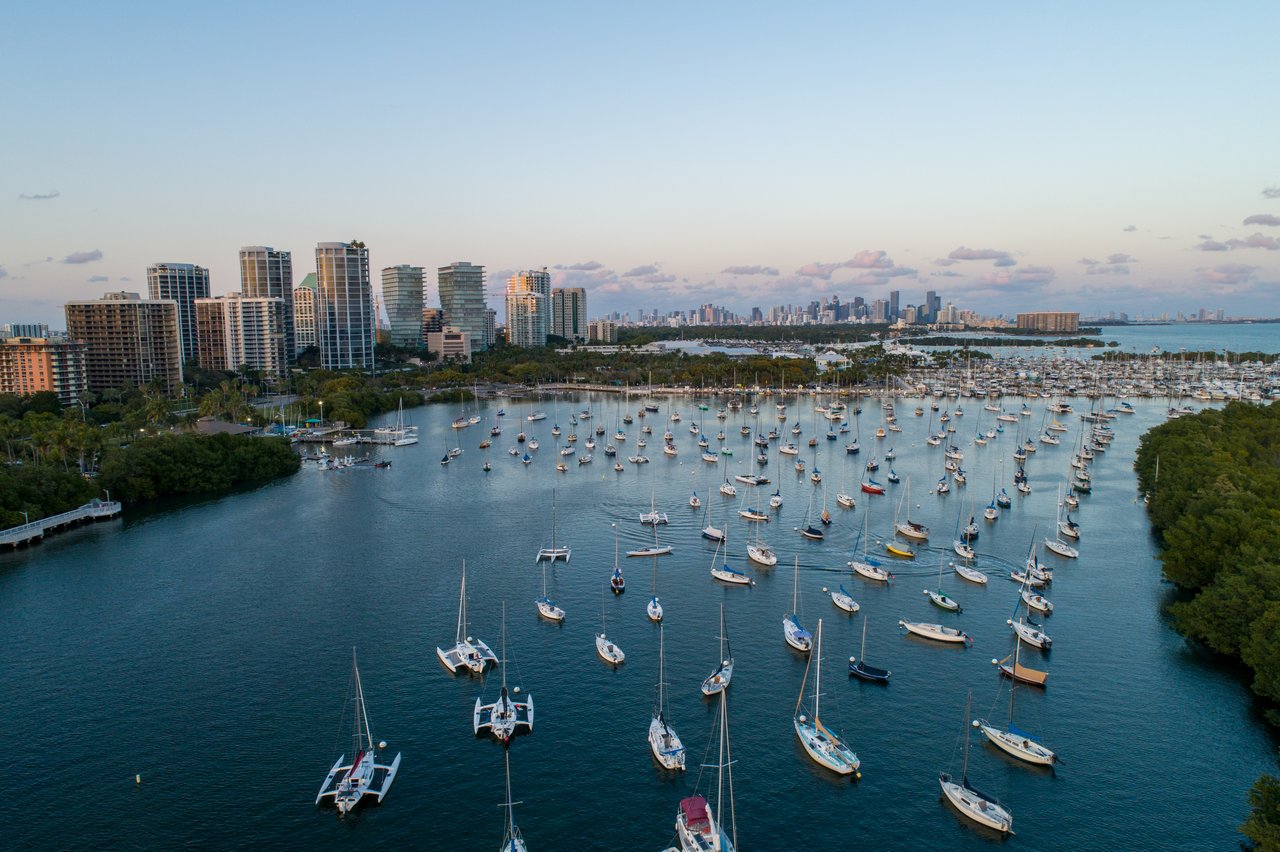
I've helped enough former New Yorkers find homes here that I can spot the pattern within ten minutes of the first call. You're moving from NYC to Miami because the math finally stopped making sense — the state income tax, the apartment that hasn't appreciated in seven years, the kids' school tuition, the winter that keeps getting longer. You've done the spreadsheet. You know the headline savings. What you don't know yet is which Miami neighborhood will actually feel like home.
As a native Miamian who has personally walked at least a hundred New York transplants through this transition, I want to give you the honest version of moving from NYC to Miami in 2026 — what surprises people, what disappoints them, and how to choose where to land so you don't end up resenting your own decision six months in.
Why People Are Moving from NYC to Miami (Still)
The pandemic-era surge has cooled, but the migration has not stopped. Florida's lack of state income tax remains the headline driver, but in conversations with my clients in 2026 the real motivations are more layered:
- Cost of housing per square foot. For the price of a 1,200-square-foot two-bedroom on the Upper East Side, you can buy a 3,500-square-foot single-family in Coral Gables or Pinecrest with a pool.
- School-age children. Miami's top private schools (Ransom Everglades, Gulliver, Carrollton, Palmer Trinity) are competitive with NYC's, and the public magnet system (MAST Academy, BAK, Coral Reef) is genuinely strong.
- Outdoor lifestyle. The thing former New Yorkers don't quite expect is how much of the year you actually live outside. The November-through-May stretch is the gift.
- Business climate. Finance, tech, and family offices have continued migrating south. Brickell is a real financial center now, not a tourist district.
The Neighborhood Decision Matters More Than the Property
Here is the single biggest mistake I see New Yorkers make: they fall in love with a specific property before they understand the neighborhood. In Manhattan, that's often fine — most of Manhattan is walkable, transit-accessible, and dense enough that the building matters more than the block. Miami is the opposite. Two homes ten minutes apart can deliver entirely different lifestyles. Spending a week in Miami and renting in two different neighborhoods before you buy is the best money you'll spend on the move.
Here's how I usually frame the neighborhood choice for New York transplants:
- You want walkable, urban, restaurant-dense, no car needed → Brickell or South of Fifth (Miami Beach). This is the closest thing to a Manhattan lifestyle that exists in Miami.
- You want family-oriented, single-family, tree-lined streets, top schools → Coral Gables, Pinecrest, or Ponce Davis. Think Westchester or the leafier parts of Brooklyn, with a pool.
- You want bohemian, waterfront, creative, walkable village → Coconut Grove. Closest analogue to the West Village if the West Village had a marina.
- You want island living, top public school, beach as backyard → Key Biscayne. No real NYC analogue. (More in my Key Biscayne luxury homes guide.)
- You want oceanfront, lock-and-leave, hotel-quality service → Bal Harbour, Surfside, or Sunny Isles. Most similar to a high-end Upper East Side full-service building, transplanted to the beach.
What Surprises New Yorkers (in Both Directions)
Pleasant surprises:
- Service quality is high and you tip the same people every week. Your dry cleaner, dog walker, and trainer all know your name within a month.
- Direct flights to almost every major city. MIA is genuinely a hub.
- Property taxes are real — but with homestead exemption and Save Our Homes cap, they grow slowly.
Unpleasant surprises (the ones I want you to hear before you sign):
- Insurance. Homeowner's insurance, flood insurance, and condo windstorm premiums have risen significantly. Budget realistically — 1.5-2.5% of property value annually is a reasonable working assumption on the coast.
- Traffic. There is no subway. The 5 PM commute from Brickell to Coral Gables can be 45 minutes for what looks like an 8-mile drive. Choose your neighborhood with your daily route in mind.
- Summer. July-September is hot and humid in a way that even Memphis transplants find surprising. Many of my clients now treat August as their New York or Europe month.
The Practical Move-Tax Stuff
If your move is partly tax-motivated, the establishment of Florida residency needs to be deliberate, not casual. The 183-day physical presence test is the headline, but New York State auditors look at a much broader set of factors: where your primary home is, where your doctors and dentist are, where your cars are registered, where you vote, where your kids are in school. I'm not a tax attorney and won't pretend to be one, but I will tell you that every client I've helped relocate has retained a Florida-licensed CPA before they close, not after. That sequencing matters.
(For more on the financial side of buying in Miami, my Miami condo HOA fees guide walks through the carrying-cost picture.)
The Cultural Adjustment New Yorkers Don't See Coming
Beyond the spreadsheet and the neighborhood map, there's a cultural shift I always try to flag for New York clients before they move. Miami is a relationship economy in a way New York is not. Contractors, doctors, dry cleaners, school admissions — outcomes here come faster when you know someone, and they move at a slower pace when you don't. New Yorkers who arrive expecting the same transactional efficiency they had in Manhattan sometimes burn relationships in the first six months they'd regret in year two.
The other adjustment is rhythm. Miami runs later — dinner at 9 PM, business meetings that start with twenty minutes of personal conversation, decisions that get made on the boat or on the golf course rather than in a conference room. Clients who lean into that rhythm thrive. Clients who try to force a Midtown calendar onto a Coral Gables month tend to feel friction they didn't expect. None of this is a deal-breaker. It's just worth knowing before you're three months in and wondering why you can't get your kitchen renovation scheduled.
What I'd Do If I Were You
If you're seriously considering moving from NYC to Miami, here's the sequence I recommend to clients:
- Visit twice in different seasons. Once in February (the easy sell) and once in late August (the honest one).
- Rent for 6-12 months before buying. Even at luxury rental rates, you'll save yourself a far more expensive mistake.
- Decide on schools first if you have kids. Top private schools have admissions cycles that close early — this drives your neighborhood decision more than commute.
- Engage a buyer's agent who knows the inventory, not just the MLS. The best Miami homes don't always hit Zillow.
One more practical note: the calendar matters. School admissions decisions for the top private schools land in late winter, which means families who want a fall start should be in active conversations the prior September-November. Closing on a home in time to establish residency for the following tax year is its own deadline. These two timelines almost always become the spine of the move plan, and getting them right at the start is the difference between a smooth landing and a stressful one.
Moving from NYC to Miami is one of the most rewarding decisions my clients make — when it's done with eyes open. If you're at the early-thinking stage and want a clear-eyed conversation about neighborhoods, schools, and timing, reach out to Chanel Hunter Milian at chanelhunterhomes.com/contact. I'll walk you through it the way I'd walk a friend.
