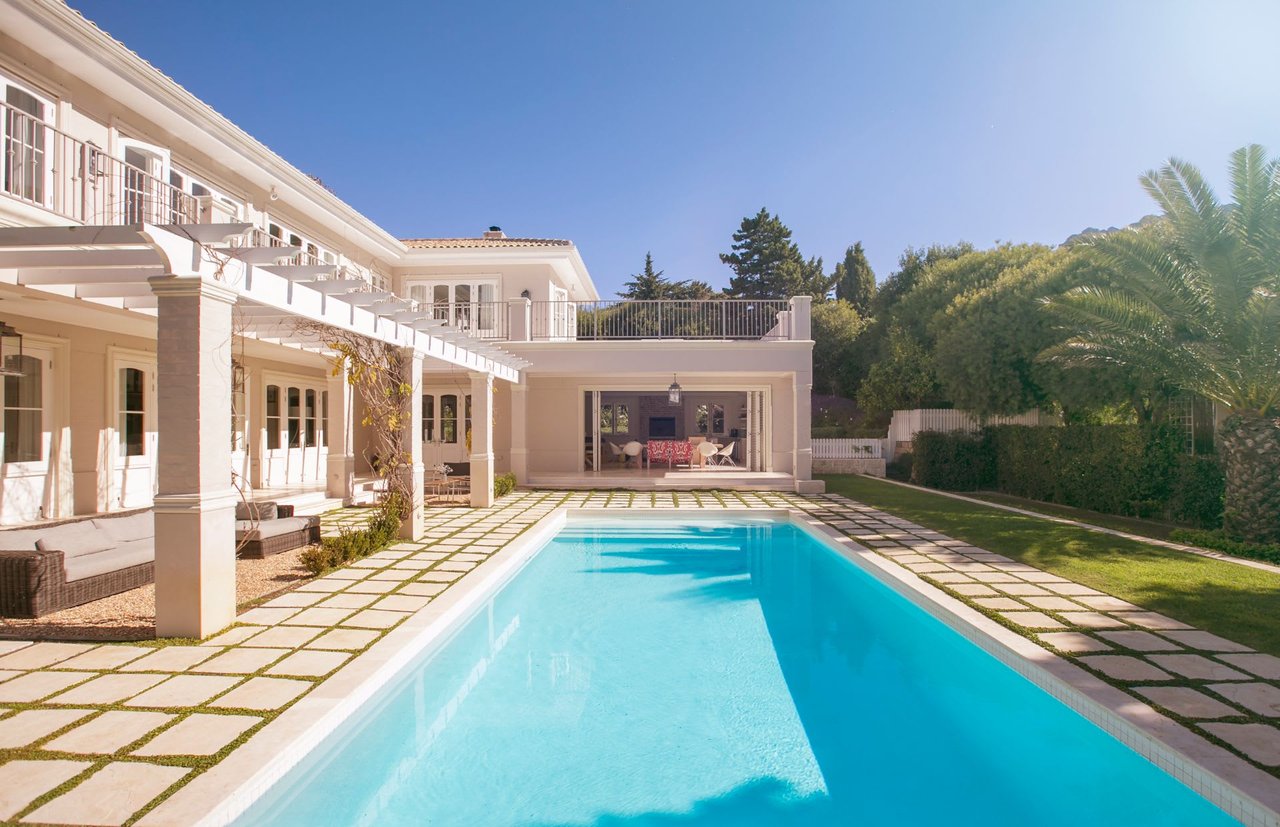
Ponce-Davis is the answer for buyers who want a true estate — an acre of privacy, mature canopy, room for a tennis court and a guest house — without surrendering the center of the map. Tucked between Coral Gables, South Miami, and Pinecrest, it is one of Miami's most discreet ultra-luxury enclaves. If you are searching “Ponce-Davis homes for sale,” you are looking at land and privacy that almost nowhere else this close in can match.
This is exactly the kind of market my background is built for. Estate properties on large lots — many being rebuilt as modern trophies — live or die on the quality of the build and the value of the land beneath them, and I spent a decade on the development and construction side before I ever represented a buyer. In Ponce-Davis, that read is worth more than in almost any neighborhood I farm.
Why buyers choose Ponce-Davis
The draw is land. Ponce-Davis lots run close to an acre — the median is around 41,000 square feet — which is why you see gated motor courts, sport courts, guest houses, and deep setbacks that simply cannot be built closer to the coast. There is no waterfront here, and that is the point: buyers trade bay frontage for acreage, privacy, and a canopy of old-growth trees, on streets with no through-traffic and a genuinely secluded feel.
Location is the second draw. Ponce-Davis sits at the meeting point of three of the county's strongest addresses — Coral Gables, South Miami, and Pinecrest — which puts you minutes from Gulliver Prep and other top schools, from the dining of the Gables and South Miami, and from the airport and the bay. It is private without being remote, a difficult balance and a large part of why the enclave commands what it does. For families weighing private school, that central position is a practical advantage as much as a prestige one — the daily commute to the area's leading campuses is short from almost every street in the enclave.
Ponce-Davis home prices in 2026
Ponce-Davis is a genuine ultra-luxury market, and the MLS proves it. Per SEF MLS (trailing twelve months), the twenty-one homes that closed did so at a median of $10.15M, about $1,522 per square foot, at 94% of list, ranging from just under $2M for a smaller lot to $23M for a trophy estate. Active listings sit at a median of $8.43M, reaching to $25M. At roughly seven months of supply it is a measured buyer's market, and 71% of closings were all-cash — the profile of a liquid, discretionary tier where price discipline and patience both matter.
Segment — SEF MLS, trailing 12 mo | Median | $/sf | Range · pace |
|---|---|---|---|
Closed (21) | $10.15M | ~$1,522 | $1.95M–$23M · 132 CDOM · 94% SP/LP |
Active (12) | $8.43M list | ~$1,423 | $2.65M–$25M · ~6.9 mo supply · 71% cash |
Median lot | ~41,000 sf | — | Near an acre — land drives value |
Want the current Ponce-Davis list, including estates traded quietly off-market? Email [email protected] and I'll send a private, up-to-date set.
The new-construction premium — and why it matters here
Ponce-Davis is being rebuilt one estate at a time, and the MLS puts a number on it: new construction (2018 and newer) closed at a median near $2,098 per square foot, against roughly $1,508 for older homes — a premium of nearly 40%. That gap is real, but it is also where buyers overpay or underbuy if they cannot read a build. A glossy new estate is only worth the premium if the construction, systems, and finishes justify it; an older home on a prime acre can be the better buy when the land supports a future rebuild.
Because I came to real estate from construction and superintendent work on luxury homes, I read these estates the way the eventual inspector and insurer will — the framing and roof, the impact glass, the mechanical layout, the elevation, and whether the certificate of occupancy and warranties are clean. On a $10M purchase, a rushed build is not a cosmetic problem; it is a seven-figure one. That read is the core of what I protect for a Ponce-Davis buyer, on both new construction and the land-value play.
What I check before you make an offer
On any Ponce-Davis estate, I start with the land and the permits. I confirm the survey against the current footprint, pull the permit and certificate-of-occupancy history on additions and renovations — these homes are frequently expanded over decades — and assess what the lot would support if a buyer intends to rebuild or expand, since near-acre parcels are the enclave's appreciating asset. With most of the neighborhood free of a mandatory HOA, that flexibility is real and worth quantifying up front.
I also price to the working median, not the outlier. In a market where closings span from under $2M to $23M, a single trophy sale can distort the averages, so I ground every offer in genuinely comparable lots and builds. With seven-plus months of supply and sales closing at 94% of list, a well-advised buyer generally has room to negotiate on price, credits, and timeline — leverage I use deliberately.
Life in Ponce-Davis
Day to day, Ponce-Davis lives like a private, green retreat in the middle of the city. The streets are quiet and heavily canopied, the lots are large enough that neighbors sit a comfortable distance away, and the setting is estate-like without being isolated. Families are drawn by the combination of privacy, space for children and pets to roam, and proximity to some of the county's most sought-after public and private schools. It is a drive-to rather than a walk-to lifestyle, which is the trade every estate buyer here makes willingly: the acre that defines the home is the same acre that means you drive to dinner.
For the buyer taking the long view — a family estate to hold and rebuild, a legacy property — Ponce-Davis offers a stability of setting that is increasingly rare this close to the coast. The neighborhood's large lots and mature landscaping are effectively irreplaceable, and that scarcity underpins value at the top of the market. I help buyers weigh that horizon deliberately, because a Ponce-Davis purchase is rarely a short-term move; it is a decade-plus commitment to a specific kind of privacy and land.
Ponce-Davis vs the neighbors
Ponce-Davis competes with Pinecrest for the land-first estate buyer and with Coral Gables for the prestige-first one. Pinecrest offers comparable acreage at a generally lower basis; Coral Gables offers architecture, walkable village life, and gated waterfront; Ponce-Davis splits the difference — near-acre privacy at a central, tri-neighborhood address, with a rebuilt-estate market of its own. If land and privacy lead your list and you want to sit at the center of the Gables–South Miami–Pinecrest triangle, Ponce-Davis is the shortest path, and I'll compare it against all three honestly.
Frequently Asked Questions
Are there waterfront homes in Ponce-Davis?
No — Ponce-Davis is an inland estate enclave; its value is land, privacy, and canopy rather than bay frontage. For direct-water boating I'd point you to Gables by the Sea, Cocoplum, or Sans Souci Estates instead.
How much do Ponce-Davis homes cost?
Per SEF MLS (trailing twelve months), closings ran a median of about $10.15M, roughly $1,522 per square foot, from just under $2M to $23M. I price each estate to comparable lots and builds.
Does Ponce-Davis have an HOA?
Most of the neighborhood has no mandatory HOA, which gives owners real freedom to renovate, expand, or rebuild — subject to county code, which I confirm per property.
Ready to see Ponce-Davis in person? Email [email protected] or call/text and I'll build a private tour of what's available, on-market and off.
Chanel Hunter Milian at Douglas Elliman. License #3302916. Equal Housing Opportunity.
